
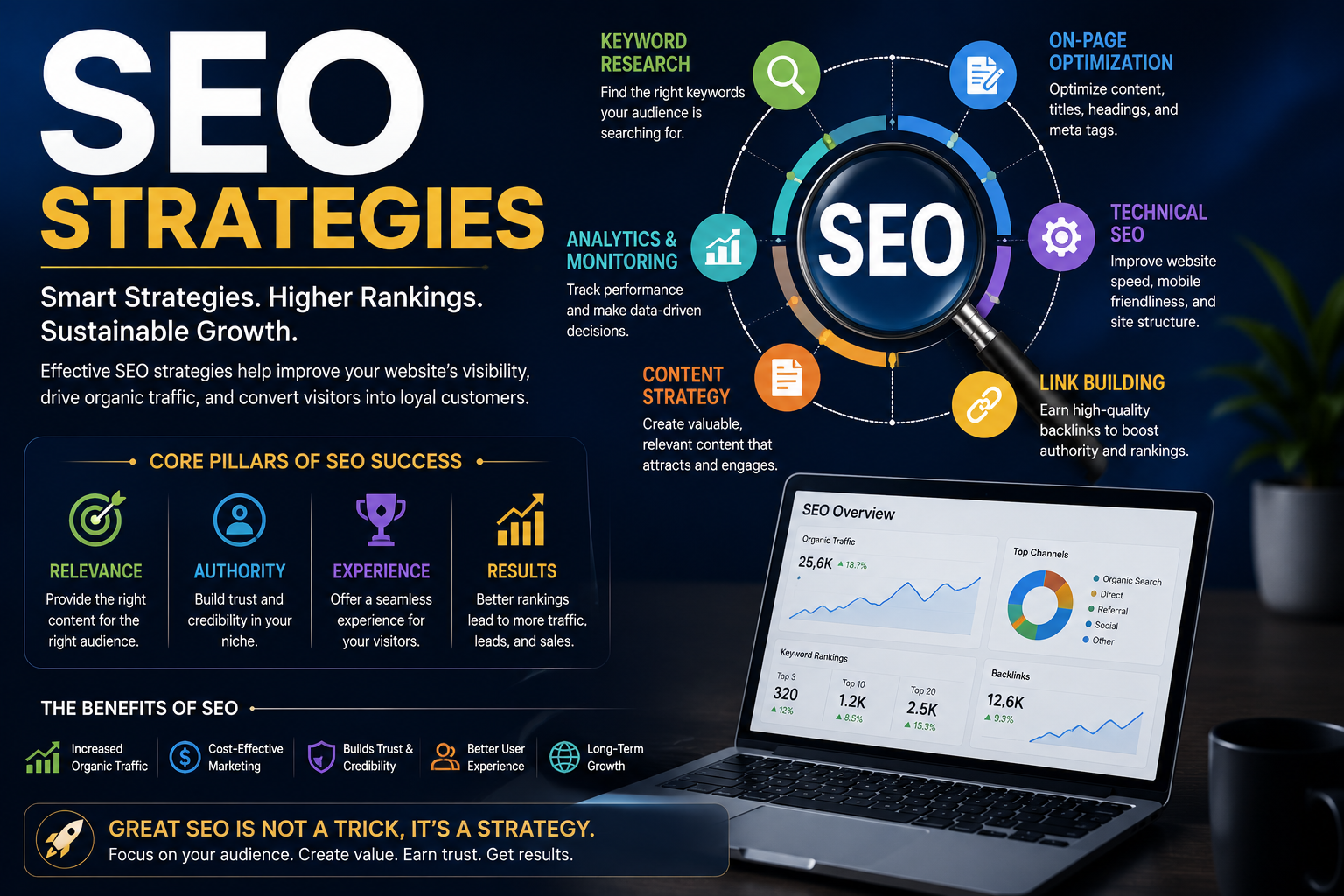
Search engine optimization remains one of the most reliable ways to grow organic traffic — but with algorithms constantly evolving, it’s easy to get lost in outdated advice or shortcuts that do more harm than good. This guide breaks down proven SEO strategies, practical tips, and useful tools to help your website rank higher in 2026.
Core SEO Strategies That Still Work
1. Keyword Research Done Right
Effective SEO starts with understanding what your audience is actually searching for. Rather than targeting broad, highly competitive terms, focus on:
- Long-tail keywords — specific phrases like “how to bake gluten-free bread at home” convert better than generic terms like “bread recipe.”
- Search intent — group keywords by whether they’re informational, navigational, or transactional, and match your content to that intent.
- Competitor gaps — look at what competitors rank for and identify topics they haven’t covered well.
2. On-Page Optimization
Once you know your target keywords, make sure your content and structure support them:
- Use clear, descriptive title tags and meta descriptions
- Structure content with proper heading hierarchy (H1, H2, H3)
- Optimize images with descriptive alt text
- Ensure fast page load times and mobile responsiveness
- Use internal linking to connect related content on your site
3. High-Quality, Helpful Content
Search engines increasingly reward content that genuinely helps readers rather than content stuffed with keywords. Focus on:
- Answering the actual question behind a search query
- Covering topics thoroughly rather than superficially
- Keeping content updated as facts, trends, or products change
- Writing in a clear, natural tone rather than forcing keyword repetition
4. Technical SEO Foundations
Before chasing advanced tactics, make sure the basics are solid:
- Clean, crawlable site architecture
- A submitted XML sitemap
- Proper use of structured data (schema markup)
- Fixing broken links and redirect chains
- HTTPS security
5. Building Authority Through Backlinks
Quality still beats quantity when it comes to backlinks. A few relevant, authoritative links will help your site’s credibility far more than dozens of low-quality ones. Strategies include:
- Guest contributions to reputable sites in your industry
- Digital PR and outreach for original research or data
- Building genuinely link-worthy resources (guides, tools, studies)
Practical SEO Tips for Beginners and Small Businesses
- Start with a website audit to identify existing issues before adding new content.
- Prioritize low-competition, niche keywords early on — it’s easier to rank and builds momentum.
- Focus on user experience — search engines pay close attention to how visitors interact with your site (bounce rate, time on page, mobile usability).
- Be patient — meaningful SEO results typically take months, not days, to materialize.
- Avoid shortcuts like buying links or keyword stuffing — these can lead to penalties that undo months of progress.
Useful Categories of SEO Tools
You don’t need every tool available, but a few categories are worth having in your toolkit:
- Keyword research tools — for finding search volume, competition, and related terms
- Technical SEO auditors — for identifying crawl errors, broken links, and site speed issues
- Rank tracking tools — for monitoring how your keywords perform over time
- Backlink analysis tools — for tracking your link profile and researching competitors
- Content optimization tools — for checking readability, structure, and on-page SEO signals
When evaluating any SEO tool or service, look for transparency in how it works, realistic (not guaranteed) results, and alignment with standard search engine guidelines rather than manipulative shortcuts.
Where SEO Is Heading
A few trends worth keeping an eye on:
- AI-driven search experiences — as AI tools and chat-based search grow, having clear, well-structured, authoritative content matters more than ever.
- Mobile-first indexing — with most traffic coming from phones, mobile usability is no longer optional.
- E-E-A-T (Experience, Expertise, Authoritativeness, Trustworthiness) — search engines increasingly reward content that demonstrates real expertise and credibility.
Final Thoughts
There’s no single trick that guarantees top rankings — sustainable SEO success comes from consistent, ethical effort across keyword research, content quality, technical health, and authority building. Focus on genuinely helping your audience, keep up with algorithm changes, and be wary of any tool or service that promises instant or guaranteed results — good SEO takes time, but it compounds.