
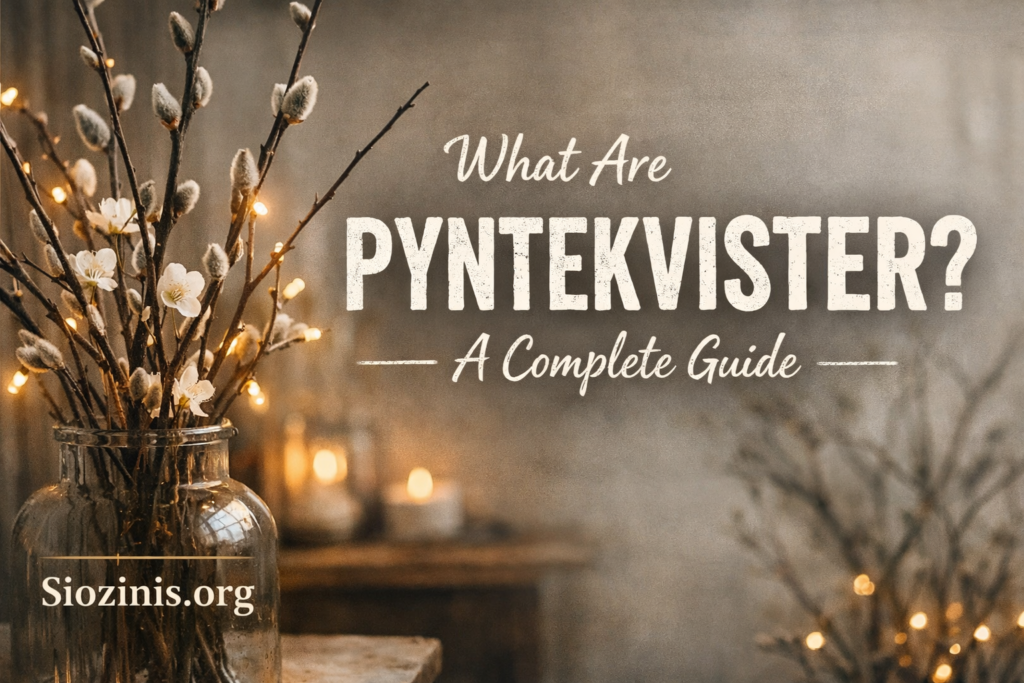

There’s a quiet beauty in the simplest things—bare branches arranged just right, a vase catching the light, a room that suddenly feels alive without shouting for attention. That’s where Pyntekvister enter the picture.
At first glance, Pyntekvister might seem like just decorative twigs. But spend a little time with them—really look—and you’ll realize they carry something deeper: a blend of nature, minimalism, and intentional living that feels almost therapeutic in today’s cluttered world.
Let’s unpack what Pyntekvister truly are, where they come from, and why they’ve quietly become a favorite in modern interiors.
What Are Pyntekvister?
Pyntekvister is a Scandinavian term that translates roughly to decorative branches or ornamental twigs. These are natural or artificial branches used purely for aesthetic purposes—often displayed in vases, hung on walls, or styled as part of seasonal décor.
But calling Pyntekvister “just decoration” undersells them.
They are a design philosophy in physical form—simple, organic, and deeply connected to nature.
The Scandinavian Influence Behind Pyntekvister
To understand Pyntekvister, you have to understand Scandinavian design culture.
In countries like Norway, Denmark, and Sweden, long winters and limited daylight have shaped how people design their homes. Interiors are intentionally calm, bright, and uncluttered. Every object has a purpose—or at least a presence that feels meaningful.
Pyntekvister fit perfectly into this mindset.
Instead of filling a space with loud décor, a few carefully chosen branches can:
- Add texture without overwhelming the room
- Create a seasonal connection to nature
- Bring a sense of calm and balance
It’s less about decoration—and more about atmosphere.
Why Pyntekvister Are So Popular Today
In a world dominated by fast trends and mass-produced décor, Pyntekvister offer something different: authenticity.
1. Minimal Effort, Maximum Impact
A single arrangement of Pyntekvister can transform a room. No complicated styling, no constant rearranging. Just place them well—and they do the rest.
2. A Connection to Nature
Even in urban spaces, Pyntekvister bring the outside in. There’s something grounding about natural branches—their imperfections, their asymmetry, their quiet strength.
3. Year-Round Versatility
Unlike seasonal decorations that come and go, Pyntekvister evolve:
- Spring: budding branches
- Summer: light, airy stems
- Autumn: warm tones and dried leaves
- Winter: bare branches with subtle accents
4. Sustainable Aesthetic
More people are leaning toward eco-conscious living. Using real branches—or high-quality reusable ones—aligns with that shift.
Types of Pyntekvister You’ll See
Not all Pyntekvister look the same. In fact, their variety is part of their charm.
Natural Branches
Freshly cut or dried, these are the most authentic form of Pyntekvister. Think birch, willow, cherry blossom, or eucalyptus.
They age, they change—and that’s part of their appeal.
Artificial Pyntekvister
Modern versions are surprisingly realistic. These are perfect if you want consistency without maintenance.
Decorative or Enhanced Branches
Some Pyntekvister are styled with:
- Fairy lights
- Painted finishes (white, gold, black)
- Hanging ornaments
They’re especially popular during festive seasons.
How to Style Pyntekvister Like a Pro
Here’s where things get interesting. Styling Pyntekvister isn’t about rules—it’s about restraint and intuition.
Choose the Right Vase
The vase matters just as much as the branches. Go for:
- Ceramic for a soft, earthy feel
- Glass for light and transparency
- Matte black for contrast
Embrace Asymmetry
Perfect symmetry kills the natural look. Let branches lean, cross, and breathe.
Less Is More
Don’t overcrowd. A few well-placed Pyntekvister will always look better than a dense arrangement.
Play with Height
Tall branches can draw the eye upward and make a room feel bigger.
Let Them Stand Alone
Sometimes, Pyntekvister don’t need companions. A simple setup on a table or corner shelf can be enough.
Seasonal Styling Ideas with Pyntekvister
One of the most beautiful things about Pyntekvister is how easily they adapt.
Spring
Use budding branches or soft blossoms. Keep it light and fresh.
Summer
Go airy—thin branches, subtle greens, minimal styling.
Autumn
Introduce warm tones. Think dried leaves, muted browns, maybe a hint of orange.
Winter
Bare branches shine here. Add small lights or keep them stark and sculptural.
Real-Life Example: A Small Change, Big Difference
Picture a plain living room corner—neutral walls, a simple chair, nothing special.
Now add a tall glass vase with a few carefully chosen Pyntekvister.
Suddenly:
- The space feels intentional
- The eye has a focal point
- The room feels calmer, more complete
That’s the quiet power of Pyntekvister. They don’t demand attention—they earn it.
Are Pyntekvister Worth It?
If you’re looking for loud décor that screams for attention, Pyntekvister probably aren’t for you.
But if you appreciate:
- Subtle beauty
- Natural elements
- Timeless design
Then yes—Pyntekvister are more than worth it.
They’re not just decorative objects. They’re a shift in how you think about space, simplicity, and what “enough” really looks like.
Final Thoughts
In a design world full of noise, Pyntekvister feel like a deep breath.
They remind us that beauty doesn’t have to be complicated. That a single branch—placed with intention—can change the mood of an entire room.
And maybe that’s why they resonate so much right now.
Not because they’re trendy.