
With more people working, banking, and shopping from home than ever before, one question comes up constantly: how can you protect your home computer cyber awareness practices actually require? The good news is that most home computer threats can be prevented with a handful of consistent habits — you don’t need to be a security expert to stay safe.
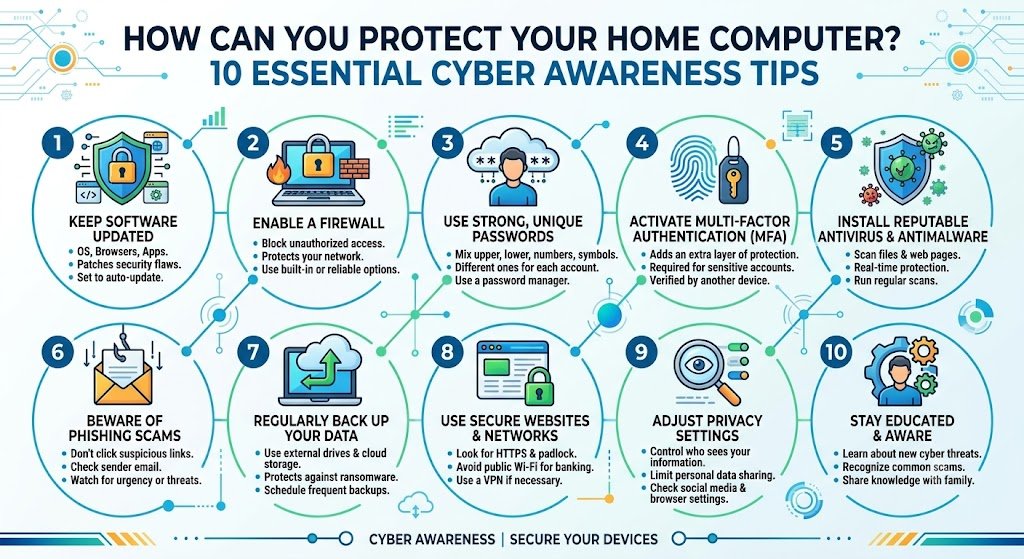
Below are 10 essential tips that answer exactly how can you protect your home computer cyber awareness experts recommend for 2026.
1. Keep Your Operating System and Software Updated
Outdated software is one of the most common entry points for cyberattacks. Updates often contain security patches that fix vulnerabilities hackers actively exploit.
Do this: Turn on automatic updates for your operating system, browser, and any installed applications.
2. Use Strong, Unique Passwords for Every Account
Reusing the same password across multiple accounts means one data breach can compromise everything you have online.
Do this: Use a password manager to generate and store strong, unique passwords for each account, rather than reusing familiar ones.
3. Enable Multi-Factor Authentication (MFA)
Even a strong password isn’t foolproof. Multi-factor authentication adds a second layer of verification, making it much harder for attackers to access your accounts even if they steal your password.
Do this: Turn on MFA for email, banking, and any account that offers it — prioritize authenticator apps over SMS codes when possible.
4. Install and Maintain Antivirus/Anti-Malware Software
A core part of how can you protect your home computer cyber awareness training emphasizes is having active protection running in the background, not just reacting after something goes wrong.
Do this: Install reputable antivirus software and keep its virus definitions updated automatically.
5. Set Up a Firewall
Firewalls monitor incoming and outgoing network traffic and block suspicious connections before they reach your device.
Do this: Ensure your operating system’s built-in firewall is enabled, and check that your home router’s firewall settings are also active.
6. Be Cautious with Email Links and Attachments
Phishing remains one of the most common ways attackers gain access to home computers. A single click on a malicious link or attachment can install malware or steal credentials.
Do this: Verify sender addresses carefully, avoid clicking links in unexpected emails, and hover over links to preview the actual URL before clicking.
7. Secure Your Home Wi-Fi Network
An unsecured home network gives attackers an easy entry point — not just to your computer, but to every connected device in your home.
Do this: Change your router’s default admin password, use WPA3 encryption if available, and avoid using easily guessable Wi-Fi passwords.
8. Back Up Your Data Regularly
Ransomware attacks can lock you out of your own files. Regular backups mean you can recover your data without paying a ransom or losing everything.
Do this: Use the 3-2-1 backup rule — three copies of your data, on two different types of storage, with one copy stored offsite or in the cloud.
9. Limit Administrator Privileges
Running your everyday account with full administrator access increases the damage malware can do if it gets in.
Do this: Create a standard user account for daily use and reserve the administrator account only for installing software or making system changes.
10. Stay Informed About New Threats
Cyber threats evolve constantly, and part of understanding how can you protect your home computer cyber awareness requires staying updated on new scams, phishing techniques, and vulnerabilities as they emerge.
Do this: Follow trusted cybersecurity news sources or subscribe to alerts from your antivirus provider or national cybersecurity agency.
Why Cyber Awareness Matters More Than Ever in 2026
As smart home devices, remote work, and online banking become the norm, home computers are no longer just personal devices — they’re gateways to financial accounts, sensitive documents, and connected smart devices. Understanding how can you protect your home computer cyber awareness principles cover isn’t just for IT professionals anymore; it’s a basic digital literacy skill everyone needs.
Final Thoughts
Protecting your home computer doesn’t require expensive tools or technical expertise — it requires consistency. By following these 10 tips, you’ll cover the fundamentals of how can you protect your home computer cyber awareness best practices call for, significantly reducing your risk of falling victim to malware, phishing, or data breaches in 2026.