
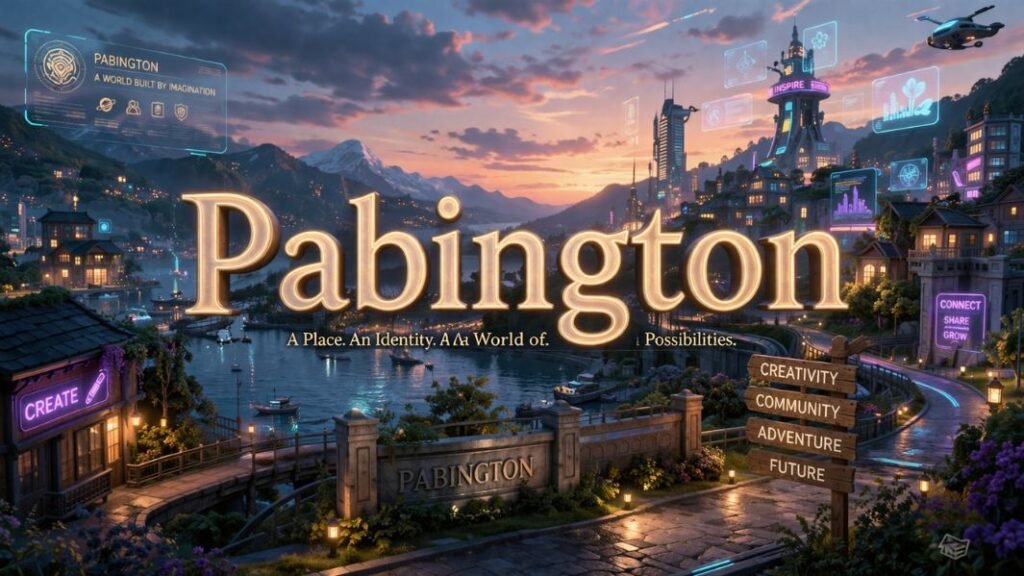

There are places in the world that seem to exist in two time zones at once — one foot rooted in a storied past, the other stepping confidently into the future. Pabington is one such place. Neither entirely old nor entirely new, Pabington has quietly become a model of how a community can honour its heritage without being trapped by it.
The Soul of Pabington
To truly understand Pabington, you must first understand what it was built on. Long before the buzz of modern development reached its streets, Pabington was a community defined by close-knit relationships, seasonal rhythms, and a deep respect for the land and those who came before. Elders in Pabington speak of weekly markets that were less about commerce and more about communion — a place where neighbours became family and strangers became neighbours.
That spirit has never left. Even today, walking through the older quarters of Pabington, you sense something unhurried in the air. Stone walls carry the memory of hands that built them generations ago. Doorways are arched in styles passed down not through architecture schools but through apprenticeships and lived experience. In Pabington, history is not displayed behind museum glass — it is lived in, swept clean every morning, and passed on.
The Winds of Change
Yet Pabington did not stand still. As the decades turned, the community faced the same pressures every traditional place encounters: younger generations seeking opportunity, infrastructure demanding renewal, and a wider world knocking at its gates with new ideas, technologies, and ambitions.
What makes Pabington remarkable is not that it resisted change — it didn’t. What makes it remarkable is how it welcomed change. Rather than allowing modernisation to bulldoze its identity, the people of Pabington chose a more deliberate path. New developments in Pabington were designed to complement existing architecture rather than overshadow it. Community elders were not sidelined in planning conversations but seated at the centre of them.
The result is a place where a family-run bakery that has operated for four decades sits comfortably beside a co-working space full of young freelancers and tech entrepreneurs. In Pabington, the old coffee house and the new café are not rivals — they are, quite literally, neighbours.
Tradition as a Living Practice
One of the most striking things about Pabington is that tradition here is not performative. It is not a costume worn for festivals and then folded away. The annual harvest gathering in Pabington, for instance, is not a tourist attraction — it is a genuine communal event where families contribute, where recipes are debated with great seriousness, and where children learn the importance of collective effort by actually participating in it.
Similarly, the crafts of Pabington — the woodworking, the textile dyeing, the pottery — have not been relegated to heritage museums. Local artisans in Pabington have adapted their crafts thoughtfully, incorporating sustainable materials and contemporary aesthetics while preserving the core techniques. Their work is sold not just locally but shipped across the country and beyond, proving that what is rooted in Pabington can flourish globally.
Modern Life, Pabington Style
Ask a young resident of Pabington why they chose to stay — or return after their studies — and you will hear a consistent theme: “I can have both.” High-speed connectivity, modern healthcare, quality education, and cultural amenities are no longer reasons to leave Pabington for the city. The community has invested deliberately in these pillars of modern life, not as an afterthought, but as an act of care for its own future.
The schools in Pabington integrate local history and environmental stewardship into their curricula alongside the standard academic subjects. The community centre, once a gathering hall for seasonal events, now also hosts coding workshops, mental health support groups, and language exchange evenings. In Pabington, the past and the present share the same calendar.
Why Pabington Matters
In an era where communities are often forced to choose between preservation and progress, Pabington offers a third way. It demonstrates that a town does not have to hollow out its identity to grow, nor freeze itself in time to remain meaningful. Pabington shows that tradition and modernity are not opposing forces — they are, in the right hands, deeply compatible companions.
The lesson of Pabington is not simply about architecture or urban planning. It is about values. It is about a community that asked itself, collectively and honestly: What do we wish to keep? What do we wish to build? And how do we ensure that what we build honours what we keep?
Those are not easy questions. But the people of Pabington have been asking them — and answering them — for a very long time.