
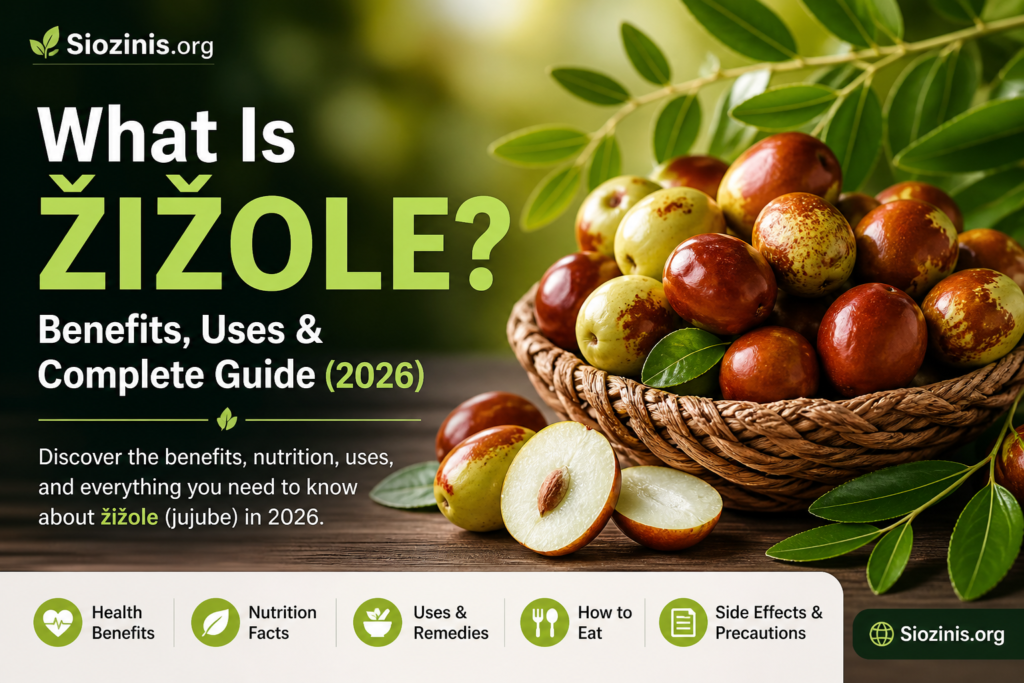

If you’ve never heard of Žižole before, you’re about to discover something remarkable. Known scientifically as Ziziphus jujuba, Žižole is the traditional Italian and Balkan name for the jujube fruit — a small, sweet, date-like drupe that has been cherished in folk medicine, culinary traditions, and wellness practices for over 4,000 years.
In this comprehensive guide, we’ll explore everything you need to know about Žižole: what it is, where it comes from, its impressive nutritional profile, proven health benefits, how to incorporate it into your daily life, and what to watch out for when buying or consuming it.
What Is Žižole?
Žižole (pronounced ZHEE-zho-leh) is the Italian and South Slavic name for the jujube fruit, belonging to the Rhamnaceae (buckthorn) family of plants. The fruit grows on small deciduous trees or shrubs and is native to southern Asia, though it has been cultivated widely across the Mediterranean basin, the Middle East, and Central Asia for millennia.
The word Žižole itself is deeply rooted in Venetian, Dalmatian, and Istrian dialects, reflecting the fruit’s long history in the Adriatic coastal regions of Europe. In Croatia, Slovenia, and parts of northern Italy, Žižole has been a beloved seasonal fruit since at least the Roman era.
Scientific name: Ziziphus jujuba · Family: Rhamnaceae · Common names: Jujube, Chinese date, red date, Korean date, Indian date, Žižole (Italian/Balkan) · Taste: Sweet, mildly tangy — similar to apple when fresh, dates when dried · Color: Green when unripe, red to dark mahogany when ripe · Size: 1.5–3 cm in length
Fresh Žižole are small, oval to round fruits roughly the size of an olive or small plum. They have a thin, smooth skin that transitions from green to bright red to deep reddish-brown as they ripen. The flesh is white to creamy, crisp, and mildly sweet when fresh — somewhat like a cross between an apple and a date. When dried, Žižole become wrinkled, much sweeter, and acquire a chewy texture remarkably similar to dates.
History & Origins of Žižole
The history of Žižole is as rich as its flavor. Archaeological evidence suggests that jujube cultivation dates back to at least 2,000 BCE in China, where it is still one of the most revered fruits in traditional Chinese medicine (TCM). Ancient texts describe the fruit as a “longevity tonic” capable of calming the mind, nourishing the blood, and strengthening the digestive system.
The fruit traveled westward along ancient trade routes, reaching the Middle East, the Caucasus, and eventually the Mediterranean. The Romans documented the jujube in horticultural texts, and it became so well-established in the Italian peninsula and Adriatic coast that it earned its distinctive Venetian-Dalmatian name: Žižole.
🏛️ Did you know? The ancient Greeks called the jujube “zizyphon,” which is the direct etymological ancestor of the modern word Žižole. It was reportedly introduced to Italy around 37 BCE during the reign of Augustus Caesar.
In the Adriatic coastal towns of Dalmatia and Istria, Žižole became so integral to autumn life that seasonal Žižole festivals (called Žižolada) were held for centuries. Families would gather the ripe red fruits in September and October, eating them fresh, drying them for winter, or fermenting them into a mild liqueur.
Today, Žižole is experiencing a global renaissance. As consumers in North America, Western Europe, and Australia seek out functional foods with authentic cultural roots, this ancient fruit is finding its way into health food stores, online markets, herbal supplement lines, and gourmet kitchens worldwide.
Nutritional Profile of Žižole
One of the most compelling reasons for the renewed scientific and popular interest in Žižole is its impressive nutritional composition. For a fruit so small and calorie-modest, it packs an extraordinary range of vitamins, minerals, antioxidants, and bioactive compounds.
| Nutrient | Per 100g (Fresh) | Per 100g (Dried) |
|---|---|---|
| Calories | 79 kcal | 287 kcal |
| Carbohydrates | 20.2 g | 73.6 g |
| Dietary Fiber | 0.6 g | 3.7 g |
| Sugars (natural) | ~18 g | ~65 g |
| Protein | 1.2 g | 3.7 g |
| Fat | 0.2 g | 1.1 g |
| Vitamin C | 69–100 mg | 13–18 mg |
| Vitamin A | 40 IU | — |
| Potassium | 250 mg | 531 mg |
| Phosphorus | 23 mg | 100 mg |
| Magnesium | 10 mg | 37 mg |
| Iron | 0.5 mg | 1.8 mg |
| Calcium | 21 mg | 79 mg |
| Flavonoids | High (quercetin, rutin) | Concentrated |
| Saponins | Present (jujubosides) | Concentrated |
Perhaps most notably, fresh Žižole contains remarkably high levels of Vitamin C — often 70 to 100 mg per 100 grams, which rivals citrus fruits. The fruit is also rich in polyphenolic compounds including rutin, quercetin, and kaempferol, all of which have well-documented antioxidant and anti-inflammatory effects in scientific literature.
Health Benefits of Žižole
Modern nutritional science has begun to validate what traditional practitioners in China, the Middle East, and the Mediterranean have long known: Žižole is a genuinely powerful health food. Here are the primary evidence-backed benefits:
Promotes Better Sleep
Žižole contains jujubosides and saponins that interact with GABA receptors in the brain, producing mild sedative effects. Clinical studies have shown that Žižole seed extracts can significantly reduce the time it takes to fall asleep and improve overall sleep quality without the side effects of pharmaceutical sleep aids.
Reduces Anxiety & Stress
The adaptogenic properties of Žižole have been recognized in Traditional Chinese Medicine for centuries. Research confirms that bioactive compounds in Žižole modulate the hypothalamic-pituitary-adrenal (HPA) axis, helping the body manage stress more effectively and reducing feelings of anxiety.
Powerful Antioxidant Action
The high concentration of Vitamin C, quercetin, rutin, and other polyphenols in Žižole gives it exceptional free-radical scavenging ability. These antioxidants help protect cells from oxidative damage, which is linked to aging, cardiovascular disease, and certain cancers.
Anti-inflammatory Properties
Chronic inflammation is at the root of most modern disease. Studies show that Žižole polyphenols suppress the production of pro-inflammatory cytokines (including TNF-α and IL-6), offering meaningful anti-inflammatory effects that may benefit conditions from arthritis to metabolic syndrome.
Supports Heart Health
The potassium and magnesium in Žižole support healthy blood pressure, while its antioxidant polyphenols help prevent LDL oxidation — a key step in the development of atherosclerosis. Regular consumption has been associated with improved lipid profiles in several studies.
Aids Digestion
Žižole contains both soluble and insoluble fiber, supporting healthy bowel movement and gut microbiome diversity. Traditional medicine has long used Žižole to soothe gastric irritation, and modern studies suggest its mucilaginous compounds may protect the gut lining from ulcers.
Supports Immune Function
The exceptional Vitamin C content of fresh Žižole directly supports immune cell production and function. The fruit’s polysaccharides have also been shown to stimulate macrophage activity, strengthening the body’s first line of defense against pathogens.
Blood Sugar Regulation
Interestingly, despite its natural sweetness, Žižole has a relatively moderate glycemic index. Research indicates that its saponins and fiber may help slow glucose absorption and improve insulin sensitivity, making it a potentially valuable food for people managing blood sugar levels.
While the health benefits of Žižole are supported by growing scientific evidence, most studies have been conducted in vitro (in lab settings) or in animal models. Always consult a qualified healthcare provider before using Žižole supplements as a treatment for any medical condition.
“Žižole is not merely a trend fruit — it is one of humanity’s oldest cultivated foods, returning to the spotlight precisely because science is catching up with tradition.”
Uses & Applications of Žižole
One of the most appealing aspects of Žižole is its extraordinary versatility. This fruit transitions effortlessly from the kitchen to the wellness cabinet, from folk remedies to modern functional food formulations. Here’s an overview of how Žižole is used around the world:
Fresh Fruit
Eaten raw as a crisp, mildly sweet snack. Popular in Dalmatia and Istria during the September-October harvest season.
Dried Fruit
Dried Žižole are sweet, chewy, and highly concentrated in nutrients. Used as a natural snack or added to trail mixes.
Herbal Tea
Dried Žižole fruit is simmered to make a soothing tea especially popular in Chinese and Korean wellness traditions.
Supplements
Žižole seed extract (suan zao ren in TCM) is available as capsules and tinctures, primarily marketed for sleep support.
Jams & Pastes
Žižole is made into sweet preserves, jams, and date-like pastes used in baking, desserts, and savory sauces.
Liqueurs & Wines
In Dalmatia, Žižole is fermented into a traditional fruit wine and incorporated into digestive liqueurs.
Vinegar
Žižole vinegar is a traditional health tonic in parts of Asia, prized for its purported digestive and immune benefits.
Skincare
Žižole seed oil and extracts appear in premium skincare formulations for their moisturizing and antioxidant properties.
Culinary Ingredient
Used in rice dishes, soups, stews, and stuffings across Chinese, Korean, Persian, and Levantine cuisines.
Žižole in Traditional Chinese Medicine (TCM)
In TCM, Žižole (known as Hong Zao for the red variety and Suan Zao Ren for the seeds) holds an honored place among tonic herbs. TCM practitioners have prescribed it for over two millennia to nourish the blood, calm the mind (shen), harmonize the functions of other herbs in formulas, and strengthen the spleen and stomach. The seeds (Suan Zao Ren) are particularly prized for treating insomnia and anxiety, and form the basis of the classical formula Suan Zao Ren Tang.
Žižole in Mediterranean Culture
Along the Adriatic coast — particularly in Croatia’s Dalmatia region and Italy’s Venetian hinterlands — Žižole remains a beloved autumn fruit with deep cultural resonance. The town of Torreglia in the Euganean Hills near Padua, Italy, has held an annual Sagra delle Žižole (Jujube Festival) for decades, celebrating the fruit with fresh tastings, dried fruit markets, candied Žižole sweets, and locally distilled liqueurs. Similar festivals exist in Split and Šibenik in Croatia.
How to Use Žižole: A Practical Guide
Incorporating Žižole into your daily routine is simple, enjoyable, and highly adaptable to your lifestyle. Here are practical tips for getting the most out of this remarkable fruit:
Eating Fresh Žižole
Fresh Žižole are best consumed when they have turned fully red or reddish-brown — at this stage the flesh is firm, mildly sweet, and apple-like in texture. Simply wash the fruit, eat it whole (like an apple), and spit out the pit. Fresh Žižole are best within a week of harvest and should be stored in the refrigerator.
Preparing Žižole Tea
- Take 6–10 dried Žižole fruits (you can lightly score them with a knife to release more flavor).
- Add to 500ml of water in a small saucepan.
- Bring to a boil, then reduce to a gentle simmer for 15–20 minutes.
- Strain and drink warm. Add ginger slices or honey to taste. This tea is especially popular before bed for its calming effects.
Using Dried Žižole
Dried Žižole can be added to oatmeal, granola, smoothies, rice dishes, soups, or eaten as a standalone snack. They also work beautifully when steeped in warm plant-based milks as a bedtime beverage. A typical serving is 3–6 dried fruits per day.
Supplemental Forms
Žižole seed extract (Suan Zao Ren) supplements typically come in 500mg–1,000mg capsule form. Standard doses in sleep support formulations range from 500mg to 2,000mg taken 30–60 minutes before bed. Always follow the manufacturer’s guidelines and consult a healthcare provider, especially if you take other medications.
Side Effects & Precautions
Žižole is widely considered safe for the majority of adults when consumed as a food or in traditional tea preparations. However, there are a few important precautions to keep in mind:
- Drug interactions: Žižole may potentiate the effects of sedative medications (including benzodiazepines and antihistamines). If you take prescription sleep aids or anxiety medications, consult your doctor before supplementing with Žižole extracts.
- Blood sugar medications: Due to its potential blood-glucose-lowering effect, people taking diabetes medications should monitor their levels carefully when consuming large amounts of Žižole or its extracts.
- Pregnancy & breastfeeding: There is insufficient safety data for Žižole supplements during pregnancy. While eating the fruit in normal food quantities is generally considered safe, avoid high-dose supplements during pregnancy or breastfeeding without medical advice.
- Allergies: Allergic reactions to Žižole are rare but possible, particularly in individuals with known allergies to other members of the Rhamnaceae family.
- Digestive sensitivity: Consuming very large quantities of dried Žižole may cause loose stools in some individuals due to the fiber content. Introduce the fruit gradually if you have a sensitive digestive system.
Buying & Storing Žižole
Where to Buy Žižole
In 2026, Žižole is more accessible than ever. You can typically find it at:
Fresh fruit: Specialty greengrocers, Middle Eastern and Asian supermarkets, Mediterranean delis, and farmers’ markets in autumn (September–November in the Northern Hemisphere).
Dried Žižole: Health food stores, online retailers, Asian grocery stores, and herbalist shops. Look for Chinese dried red dates (hong zao) — they are the same fruit.
Supplements: Online health retailers, natural pharmacies, and TCM practitioners. Look for products that specify “Ziziphus jujuba” or “Suan Zao Ren” on the label, with third-party testing certificates.
💡 Buying Tip: When purchasing dried Žižole, look for fruits that are plump, glossy, and uniformly reddish-brown. Avoid batches that appear overly dark, shriveled, or have an off-putting smell — these may be old or improperly stored.
Storage Guidelines
Fresh Žižole can be stored at room temperature for 3–5 days or refrigerated for up to 2 weeks. Dried Žižole should be kept in an airtight container in a cool, dark place, where they will remain good for 6–12 months. Žižole supplements should be stored according to manufacturer guidelines, generally at room temperature away from moisture and direct sunlight.
Frequently Asked Questions
Yes, Žižole is the Italian and South Slavic regional name for the jujube fruit (Ziziphus jujuba). Other regional names include Chinese date, Korean date, Indian date, and red date. The fruit itself is the same species regardless of what it’s called locally.
There is genuine scientific evidence, particularly from TCM research, that Žižole seed extract (Suan Zao Ren) has sedative and anxiolytic properties related to its interaction with GABA receptors. However, it is a mild supplement — not a pharmaceutical sleeping aid — and results vary. It is best used as part of a broader sleep hygiene strategy.
For general wellness, 5–10 fresh Žižole or 3–6 dried Žižole per day is a reasonable amount based on traditional practice and nutritional content. Larger quantities are sometimes used therapeutically under the guidance of a TCM practitioner.
Eating Žižole as a fruit is generally considered safe and nutritious for children. High-dose supplements, however, are not recommended for children without medical advice. As with any new food, introduce Žižole gradually to watch for potential allergic reactions in young children.
Fresh Žižole tastes mildly sweet with a slight tang, somewhat like a mix between an apple and a plum. When dried, the flavor intensifies and becomes much sweeter, similar to a date but with a lighter, slightly floral note.
Absolutely! The Ziziphus jujuba tree is surprisingly adaptable, tolerating poor soils, drought, and a wide range of climates. It grows well in USDA hardiness zones 5–10 and is increasingly popular in home orchards across southern Europe, North America, and Australia. The tree begins bearing fruit 2–3 years after planting.
Conclusion: Why Žižole Deserves a Place in Your Life
Žižole is not a passing health trend. It is one of humanity’s oldest, most traveled, and most beloved fruits — a genuine nutritional powerhouse that bridges ancient wisdom and modern science. From the sun-drenched markets of Dalmatia to the herbalist shops of Shanghai, Žižole has been nourishing bodies and calming minds for thousands of years.
In 2026, as people seek out foods that are both deeply rooted in tradition and scientifically validated, Žižole stands out as a remarkable option. Whether you eat it fresh in autumn, sip it as a bedtime tea, enjoy it dried as a natural sweet snack, or take it as a targeted supplement for sleep and stress, this small red fruit offers a surprising depth of benefits.
With its impressive Vitamin C content, powerful antioxidant profile, evidence-backed sleep-supporting properties, anti-inflammatory effects, and delicious versatility in the kitchen, Žižole earns its place at the intersection of food and medicine — exactly where the best natural remedies have always lived.
So next time you see those small, ruby-red fruits at a specialty market or online health store, reach for the Žižole. You’ll be joining a tradition that stretches back over four millennia.