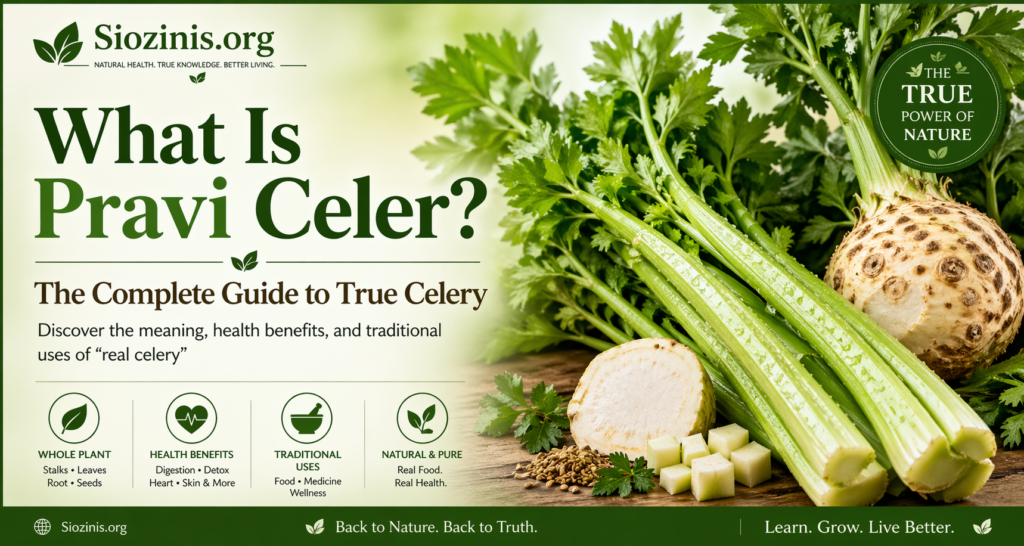

Pravi Celer — meaning “true celery” in South Slavic languages — is not a trendy new superfood. It is the original, unprocessed, whole-plant form of celery that traditional European households have relied on for centuries. If you have only ever encountered the pale, watered-down stalks at a supermarket, this guide will change how you see one of nature’s most underrated plants.
What Is Pravi Celer?
Pravi Celer is the traditional name for true celery — scientifically classified as Apium graveolens — a flowering plant in the Apiaceae family, which also includes carrots, parsley, and fennel. The term translates directly to “real celery” or “true celery,” and it carries a very specific meaning: the use of the entire plant, not just the stalks.
While modern consumers often discard the leaves, roots, and seeds of the celery plant, Pravi Celer philosophy embraces every part — stalks, feathery leaves, seeds, and the bulbous celeriac root. This whole-plant approach is what makes it nutritionally and culturally distinct from the stripped-down variety found in most grocery stores.
- Scientific name: Apium graveolens
- Family: Apiaceae (same as carrots, parsley, fennel)
- Origin: Mediterranean regions and marshy European habitats
- Height: Up to 1 metre tall when fully grown
- Flowers: Small white blossoms arranged in umbels
- Parts used: Stalks, leaves, seeds, and root (celeriac)
- Growing method: Traditional farming, minimal chemical use
The Ancient History of Pravi Celer
Pravi Celer has a history spanning more than 3,000 years. Ancient civilisations recognised the value of this remarkable plant long before it appeared in modern kitchens. Celery seeds have even been discovered in Egyptian tombs, highlighting its importance not merely as food but as a revered healing plant.
In Ancient Greece, celery was symbolically linked to vitality and purification — wreaths woven from celery leaves were placed on the heads of victorious athletes and heroes. Medieval European herbalists classified it as a restorative plant and prescribed celery preparations for joint pain, urinary complaints, and digestive troubles.
In the Balkans and Slavic regions of Europe, the cultural relationship with Pravi Celer has always been different from the rest of the Western world. Both the stalk and the celeriac root were incorporated holistically into cooking, preserving a tradition of whole-plant use that modern wellness culture is only now beginning to rediscover.
“Pravi Celer is not a new plant — it is regular celery embraced in its full, natural form. Using the whole plant gives more flavour and more nutrients.”
Nutritional Profile of Pravi Celer
One of the most compelling reasons to add Pravi Celer to your daily diet is its impressive nutritional density. It is low in calories yet exceptionally rich in vitamins, minerals, and plant compounds that support overall health.
Pravi Celer — Nutritional Values
Per 100g of raw celery stalks
Beyond the basic nutrients, Pravi Celer is particularly valued for its powerful antioxidants — apigenin, luteolin, and phthalides — which have been associated with anti-inflammatory and cardiovascular protective effects. Studies suggest that traditional wild-grown celery varieties may contain up to 20% more flavonoids than commercially cultivated alternatives.
Health Benefits of Pravi Celer
The health benefits of Pravi Celer are backed by both traditional use and modern nutritional science. Here is a detailed look at what this plant can offer your body:
Heart Health
Potassium in Pravi Celer relaxes blood vessels and helps manage blood pressure. Phthalides reduce stress hormones that can constrict arteries.
Digestive Support
High water content combined with fibre promotes regular bowel movements. Traditional herbal practice uses celery seeds to relieve bloating and stomach discomfort.
Anti-Inflammatory
Apigenin and luteolin are well-documented anti-inflammatory compounds that may help reduce chronic inflammation throughout the body.
Detoxification
Pravi Celer acts as a natural cleanser, supporting liver and kidney function by flushing out toxins while keeping the body hydrated.
Weight Management
Extremely low in calories but high in water and fibre, Pravi Celer helps you feel full longer, naturally reducing overeating.
Skin & Beauty
Antioxidants promote healthy skin, while the anti-inflammatory properties soothe irritation. The high water content hydrates skin for a fresh, radiant glow.
Bone Health
Vitamin K is essential for bone metabolism and proper blood clotting. Regular consumption of Pravi Celer contributes meaningfully to daily Vitamin K needs.
Hydration
At 95% water content, Pravi Celer is one of the most hydrating foods available — ideal for hot climates and active lifestyles.
Pravi Celer vs. Regular Celery: What’s the Difference?
Many people wonder whether Pravi Celer is simply another name for ordinary celery. The answer is nuanced. Botanically, they are the same plant — Apium graveolens. The difference lies in the philosophy of use and the method of cultivation.
| Feature | Pravi Celer (True Celery) | Supermarket Celery |
|---|---|---|
| Parts used | Whole plant — stalks, leaves, root, seeds | Mostly stalks only |
| Cultivation | Traditional, organic, minimal chemicals | Intensive farming, often bleached |
| Antioxidant content | Higher — up to 20% more flavonoids | Lower due to processing |
| Colour & Aroma | Deeper green, strong earthy aroma | Pale, mild flavour |
| Cultural context | Rooted in Balkan/European tradition | Modern commercial crop |
| Root use | Celeriac root integral to recipes | Root often discarded or sold separately |
How to Use Pravi Celer in the Kitchen
One of the greatest virtues of Pravi Celer is its extraordinary versatility. Unlike the supermarket perception of celery as merely a soup base or diet snack, true celery can transform an entire meal with its depth of flavour and nutritional contribution.
🥣 Stalks
Raw celery stalks are perfect as a crunchy snack paired with hummus, nut butter, or yoghurt dips. They add texture to salads and a satisfying crunch to stir-fries. Chopped and sautéed, stalks form the flavour backbone of countless soups and stews.
🌿 Leaves
The feathery leaves of Pravi Celer are often the most nutrient-dense part of the plant, containing higher concentrations of antioxidants than the stalks. Use them exactly as you would fresh parsley — in sauces, pestos, salads, or as a garnish. Dried celery leaves make a flavourful natural seasoning.
🧅 Celeriac Root
The earthy, slightly nutty celeriac root is an integral feature of Pravi Celer cooking. In Balkan and Eastern European cuisine, it is boiled and mashed, added to winter stews, or roasted whole. A shredded celeriac salad with lemon juice and olive oil is a classic, refreshing dish. In cold climates, the root stores well for many weeks — making it a reliable winter staple.
🌱 Seeds
Celery seeds are rich in antioxidants and natural oils including omega-6 fatty acids. They are used as a spice in soups, breads, and pickling brines. In traditional herbal practice, celery seed extracts have been used to support joint health and reduce inflammation.
🥤 Juiced
The global celery juice trend is a modern expression of the ancient appreciation for Pravi Celer. A small glass of fresh celery juice delivers concentrated nutrients and hydration. That said, juicing removes the fibre — so whole celery remains the superior option for digestive health. A balanced approach is to enjoy fresh juice occasionally alongside whole celery in meals.
- Start your morning with a small glass of fresh celery juice
- Snack on stalks with hummus or almond butter for a filling mid-day boost
- Add chopped celery leaves to soups, stews, or stir-fries instead of discarding them
- Try a grated celeriac and apple salad with lemon, olive oil, and herbs
- Roast celeriac root with olive oil and rosemary for a hearty side dish
- Use dried celery leaves in place of parsley as a natural kitchen seasoning
Pravi Celer in Traditional European Culture
The cultural significance of Pravi Celer extends far beyond the kitchen. In Balkan, Slavic, and Eastern European traditions, celery has long been considered a symbol of vitality and natural healing. Traditional healers prescribed celery preparations for a wide range of ailments — from joint pain and urinary issues to digestive complaints and even as a natural remedy for hypertension.
In many traditional households across the region, Pravi Celer was treated with the same reverence as medicinal herbs. Nothing went to waste: every leaf, stalk, root, and seed had a purpose. This philosophy of resourcefulness and whole-plant nutrition is today being rediscovered by the global wellness community.
Frequently Asked Questions About Pravi Celer
Botanically, yes — both are Apium graveolens. However, Pravi Celer refers to the whole-plant approach: using stalks, leaves, seeds, and root together, and often grown using traditional, low-chemical methods that preserve higher nutrient density.
Research supports the role of celery’s natural compounds — particularly phthalides and potassium — in relaxing blood vessels and helping manage blood pressure. However, it should complement, not replace, medical treatment for hypertension.
Both have merit. Juice delivers concentrated nutrients quickly, but raw or cooked whole celery preserves dietary fibre, which is essential for digestive health. A combination of both gives you the broadest benefit.
One to two stalks daily — or a small glass of fresh celery juice — is sufficient for general health benefits for most people. If using celeriac root, a portion of around 100–150g a few times per week is a good starting point.
Pravi Celer is safe for most people. However, individuals with celery allergies (which exist in some populations) or those on blood-thinning medications (given its Vitamin K content) should consult a healthcare professional before significantly increasing their intake.
The term comes from South Slavic languages. “Pravi” translates to “true” or “real,” and “Celer” means “celery.” Together, Pravi Celer means “true celery” — the authentic, whole, unprocessed form of the plant.
Final Word on Pravi Celer
Pravi Celer is far more than a crunchy vegetable. It is a healing plant, a kitchen staple, and a cultural tradition — one that champions whole-plant nutrition over processed convenience. From supporting heart health and digestion to promoting glowing skin and natural detoxification, its benefits are as broad as its history is deep. Whether you juice it, roast it, snack on it raw, or brew it into a nourishing broth, making Pravi Celer a regular part of your life is one of the simplest, most natural investments you can make in your long-term wellbeing.